Grand Veymont: how to reach the roof of the Vercors (2,341 m)

The Grand Veymont rises to 2,341 m, the highest point in the Vercors massif, and can be seen from everywhere across the Trièves: a long limestone ridge dominating the high plateaus, flanked to the east by sheer cliffs. It is the roof of the Vercors, and one of the massif’s great hikes: long, demanding, and rewarded by a 360-degree panorama over the entire Alps.
This article brings together the field knowledge of Altimood’s nature and mountain guides, who have been frequenting this summit for years via every approach and in every season.
- Grand Veymont or Veymond? The highest peak in the Vercors
- Altitude and geography of Grand Veymont
- Hiking Grand Veymont from La Coche (main route)
- Hiking Grand Veymont from Gresse-en-Vercors
- The Grand Veymont in 2 days with a bivouac
- Refuge near Grand Veymont
- Wildlife and nature at Grand Veymont
- Practical tips for hiking Grand Veymont
- Frequently asked questions about Grand Veymont
- Hiking with a guide to Grand Veymont
Grand Veymont or Veymond? The highest peak in the Vercors
The correct spelling is Grand Veymont, not Grand Veymond. Veymont, Veymond, Veymant… whatever the spelling, everyone is talking about the same summit: the highest peak in the Vercors, at 2,341 m.
The north-south ridge stretches roughly 3 km between the Petit Veymont (2,224 m) to the north and the Pas de la Ville to the south. To the west, the Vercors high plateaus extend as far as the eye can see, dotted with dolines, limestone pavements and alpine pastures. To the east, the dolomitic cliffs plunge nearly 800 m down to the Trièves and its villages, with the Écrins, Belledonne, and Mont Blanc in the background on a clear day.
It is a place teeming with life. Ibex, chamois, marmots, and rock ptarmigan frequent the ridge year-round. The bearded vulture regularly soars above the eastern cliffs. Edelweiss play hide-and-seek around the rocky outcrops.

Altitude and geography of Grand Veymont
At 2,341 m, Grand Veymont is the highest peak in the Vercors, ahead of Petit Veymont (2,224 m) and Mont Aiguille (2,086 m). It sits on the border between the Isère and Drôme departments, on the eastern edge of the massif.
A geographical note: Rocher Rond (2,453 m), in the Dévoluy, exceeds Grand Veymont in altitude, but only by virtue of an administrative boundary. The commune of Lus-la-Croix-Haute belongs to the Vercors Regional Nature Park, which makes Rocher Rond the highest point of the regional natural park. Grand Veymont remains, however, the roof of the geological Vercors massif.
The summit falls within the Hauts-Plateaux du Vercors National Nature Reserve, the largest nature reserve in the French Alps with 17,000 hectares of protected land.
This reserve enforces strict regulations that every hiker must know before setting out:
- Dogs prohibited, even on a lead (except working dogs accompanying shepherds)
- Bivouacking permitted only between 7 pm and 9 am (camping, staying in the same spot for an extended period, remains prohibited)
- Fires prohibited
- Overflying prohibited below 300 m (drones, paragliders)
- Picking plants and disturbing wildlife prohibited
These rules exist for good reason: visitor numbers on Grand Veymont have risen sharply in recent years, and alpine environments deteriorate quickly when not respected. Reserve wardens patrol regularly, usually with an educational approach.
Hiking Grand Veymont from La Coche (main route)
This is the most popular approach. The trailhead is the Maison Forestière de la Coche car park (1,370 m), accessible from Rousset-en-Vercors: from the road to the Grotte de la Luire, take the first forest road on the right and follow it for 7 km. Saint-Michel-les-Portes and Gresse-en-Vercors are the nearest villages for accommodation.
- Distance: 19.7 km
- Dénivelé positif: 918 m
- Dénivelé négatif: 918 m

From the La Coche car park, follow the forest track to the junction. Take the path signposted “Grand Veymont” on the left, then cross the first grassy sections. At the cairn, leave the track for the ascending path, rejoin the track at a bend and follow it to the col above the Jasse de Chaux. The path then joins the GR91.
On the GR91, continue towards the Pas de la Ville. During the grazing season, skirt around the fenced areas reserved for shepherds. The terrain gradually opens out onto the high plateaus.
The Pas de la Ville is the decisive passage of the route. Here the path becomes rocky and exposed. A few yellow marks guide you over the rock, but a few hand-holds are sometimes needed on the final metres before the summit. The drop to the east demands full concentration.
From the summit, the view opens onto two worlds at once: the high plateaus to the west, the cliffs and the Trièves to the east. On a clear day, you can make out Mont Blanc to the north, the Écrins to the south-east, Belledonne and the Chartreuse.
The return follows the Pas des Chattons, then the Grande Cabane sheepfold and the Baraque de Gerland to complete the loop back to the car park.


Hiking Grand Veymont from Gresse-en-Vercors
From Gresse-en-Vercors, Grand Veymont is approached from the western side of the plateau, via the Col de l’Allimas or the alpine pastures north of the summit. The atmosphere is different from La Coche: you first climb through forest, cross open pastures, then reach the summit ridge via more intimate passages.
Two circuits are possible depending on the time available and whether you prefer an out-and-back or a loop.
Option 1: out-and-back via Pas de la Ville (direct route)
The most direct route from Gresse-en-Vercors. You climb the western slopes of Veymont to the Pas de la Ville, then descend by the same path. Ideal for a full day out with no logistical complications.
- Distance: 9.9 km
- Dénivelé positif: 1059 m
- Dénivelé négatif: 1059 m

Option 2: loop via Pas de la Ville and Pas des Bachassons
The long and complete version of the area. You climb via the Pas de la Ville to the summit, then descend to the plateau via the Pas des Bachassons, crossing the high plateaus. A circuit that takes in far more scenery, with sections through the reserve’s isolated alpine pastures.
- Distance: 17.1 km
- Dénivelé positif: 1537 m
- Dénivelé négatif: 1501 m

The Bachassons spring is the main water source on the descent: fill your bottles before leaving Gresse, as the climb to the Pas de la Ville is long and exposed. On the plateau, the path is cairned but poorly marked in places, an IGN map is recommended.


The Grand Veymont in 2 days with a bivouac
Taking 2 days for Grand Veymont radically changes the experience. When weekend hikers head back down in the late afternoon, the plateau regains its tranquillity. The ibex resume their wanderings between Petit Veymont and Grand Veymont. The raking light of sunset sets the eastern cliffs ablaze.
Bivouacking is permitted in the Hauts-Plateaux Nature Reserve between 7 pm and 9 am. The Veymont plateau offers several flat grassy spots perfect for pitching a tent, with views over the Écrins and Mont Aiguille. No fires, no trace, no litter.


For the full account and practical advice: The Grand Veymont in 2 days with a bivouac.
Refuge near Grand Veymont
There is no staffed mountain hut at Grand Veymont. On the high plateaus, the only accommodation shelter is the Cabane des Aiguillettes, a very small unstaffed cabin. It can accommodate a few hikers but fills up quickly on summer weekends, it is better to have your bivouac gear as a backup.
For an overnight outing, several options are available:
- Bivouacking (7 pm–9 am in the reserve): the wildest and most immersive option. Tent on the plateau, guaranteed starry skies, ibex in the morning.
- The Refuge du Pas de l’Aiguille, at Chichilianne: larger and more comfortable, accessible from the Trièves side, it can serve as a base for an approach from the east.
- Valley accommodation: Gresse-en-Vercors, Chichilianne, and Saint-Michel-les-Portes offer gîtes and B&Bs for organising a two-day outing with a comfortable night’s sleep.
Wildlife and nature at Grand Veymont
Grand Veymont is one of the richest areas for wildlife in the Vercors. The Hauts-Plateaux Nature Reserve has allowed the return of species that had disappeared.
Ibex: reintroduced to the Hauts-Plateaux from 1989, they have become an almost guaranteed presence on the ridge. They are best observed in the early morning and late evening, between Petit Veymont and Grand Veymont. Adult males with their large lyre-shaped horns are particularly impressive.
Chamois: very common on the grassy slopes and ridges. Less wary than ibex, they often allow you to approach at a good distance.
Marmots: ubiquitous on the plateau, they announce the arrival of every group with sharp whistles. Their burrows line the grassy slopes.
Rock ptarmigan: this mountain grouse, which turns completely white in winter, nests on the Veymont ridges. Seeing one at the foot of a rock with Mont Aiguille in the background is one of those images that stay with you for a long time.
Bearded vulture: regularly spotted soaring along the eastern cliffs. The largest bird in Europe, with a wingspan that can exceed 2.80 m. It has been reintroduced in the Alps since 1986, and its population is steadily growing.
The flora of the alpine grasslands is equally remarkable: genepì, edelweiss, orange lily, pasque flower in spring, bilberries and cranberries in summer.
Practical tips for hiking Grand Veymont
Water: springs are scarce above the treeline. Fill up at the Bachassons spring or at the springs at the bottom of the La Coche route. Carry a minimum of 2 litres from the last water point.
Weather: summer thunderstorms are frequent on the Vercors ridges, often in the afternoon. Setting off early in the morning is strongly recommended so you are back down before 2 pm in summer. Wind on the ridge can be strong even in fine weather.
Season: June to October. Early in the season (June), snow may linger on north-facing slopes and on the ridge. Light crampons can be useful before mid-July in some years. September is ideal: fewer people, golden light, marmots active before hibernation.
Equipment: hiking boots are essential (rocky and sometimes wet terrain), warm layers and a windproof jacket even in summer (wind on the ridge is constant), trekking poles recommended for the descent.
Difficulty: the section above the Pas de la Ville requires care on exposed, rocky terrain. A few hand-holds are sometimes necessary. Not recommended for those who suffer from vertigo.
Dogs: prohibited throughout the Hauts-Plateaux du Vercors Nature Reserve, even on a lead. No exceptions.
Frequently asked questions about Grand Veymont
What is the altitude of Grand Veymont?
Grand Veymont reaches 2,341 m, making it the highest point of the geological Vercors massif, ahead of Petit Veymont (2,224 m) and Mont Aiguille (2,086 m).
How difficult is the Grand Veymont hike?
Grand Veymont is a difficult hike (4/5). The section above the Pas de la Ville is exposed and rocky, with a few hand-holds required. Not recommended for those prone to vertigo.
How long does it take to hike Grand Veymont?
From La Coche, allow 6 to 7 hours for the full loop. From Gresse-en-Vercors, the out-and-back takes around 6 hours. These times vary depending on pace and conditions.
What is the best time to hike Grand Veymont?
June to October. September is ideal: fewer crowds, golden light, marmots active before hibernation. In June, snow may linger on north-facing slopes, check conditions before heading out.
Can you bivouac at Grand Veymont?
Yes. Bivouacking is permitted in the Hauts-Plateaux Nature Reserve between 7 pm and 9 am. Extended camping in the same spot and fires remain prohibited.
Is Grand Veymont suitable for families?
Not with young children. The passage at Pas de la Ville requires concentration and is not suitable for children who are anxious about exposure. From age 12, for children used to mountain hiking, the outing is feasible, ideally with a guide.
Hiking with a guide to Grand Veymont
Grand Veymont is a long and demanding hike (level 4/5) that deserves good preparation. At Altimood, we organise outings to the summit as day trips or over two days with a bivouac, with a guide who knows the route variations and adapts the programme according to weather and group ability.
It is also a gateway to the hikes in the Vercors we offer, from the high plateaus to the gorges, taking in Mont Aiguille and the tour of the massif.
Give a guided hike with a Nature and Mountain guide to Grand Veymont as a hiking gift card.
Our guided hikes in the Vercors and the Alps
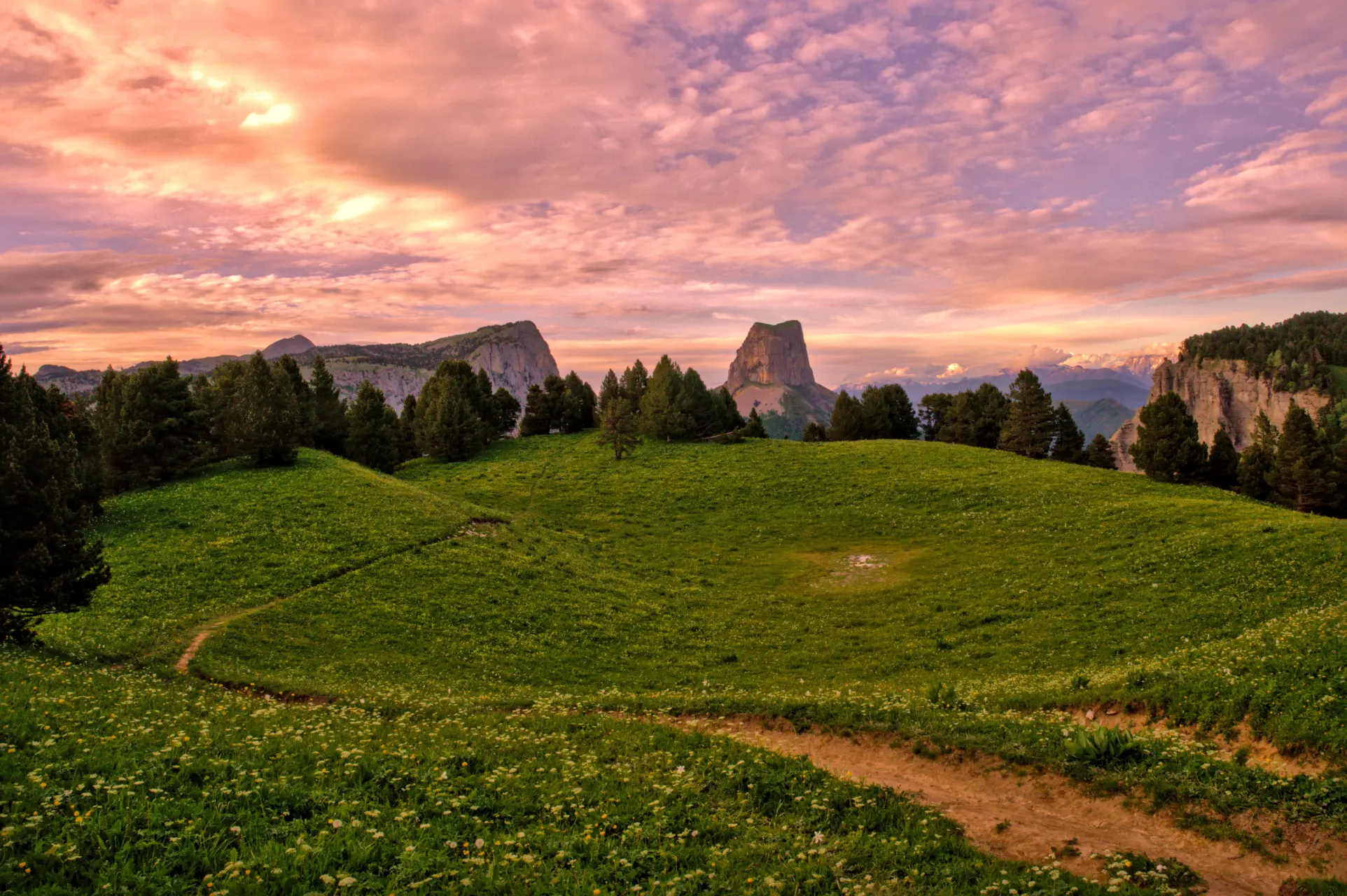 France | Vercors
Vercors Tour - 5 Days
From $1,390 – 5 daysA 5-day loop through the largest natural reserve in the Alps, accessible by train.
Know more →
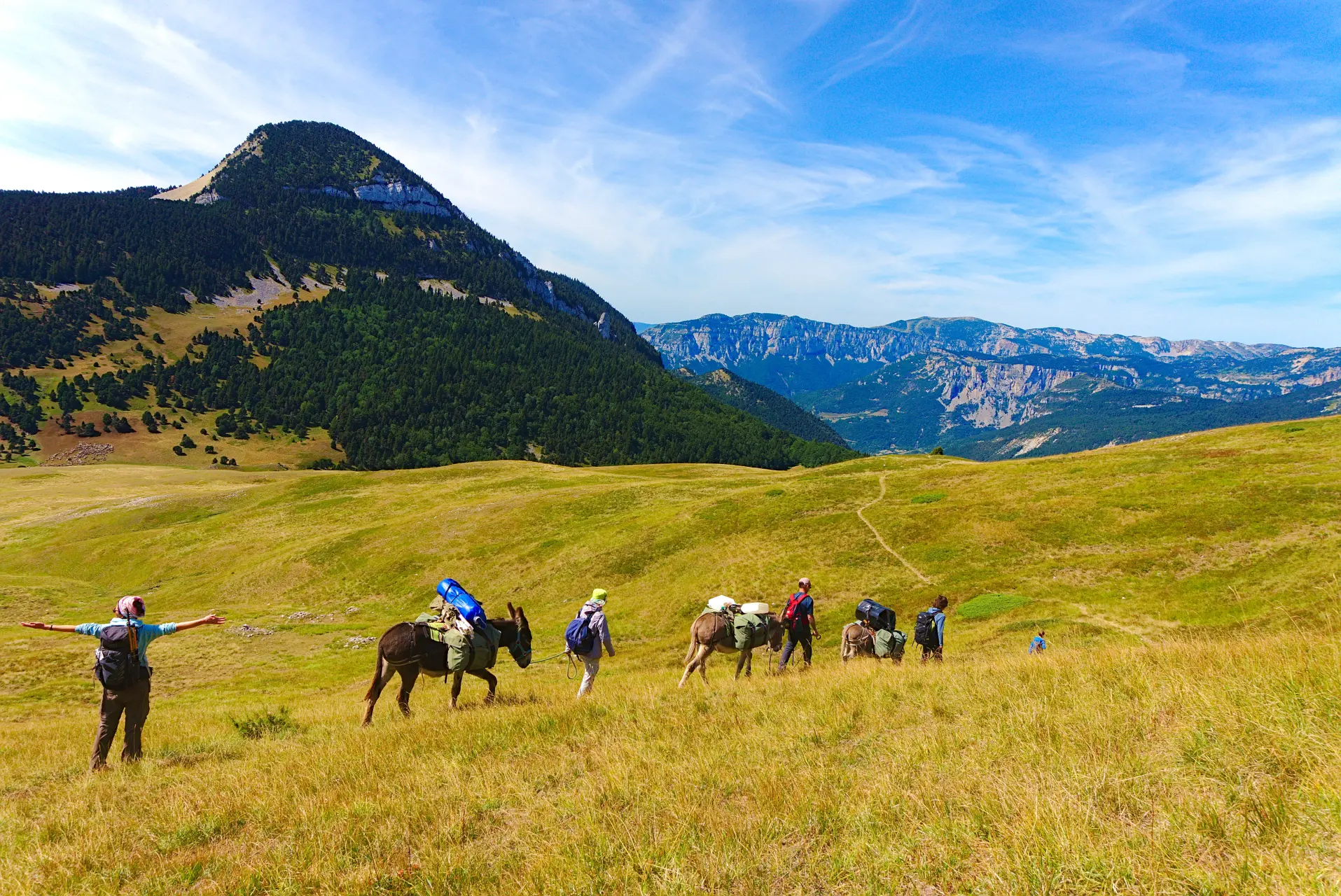 France | Vercors
Family Bivouac in the Vercors
From $990 – 4 daysA family adventure with donkeys through the Vercors High Plateaus.
Know more →
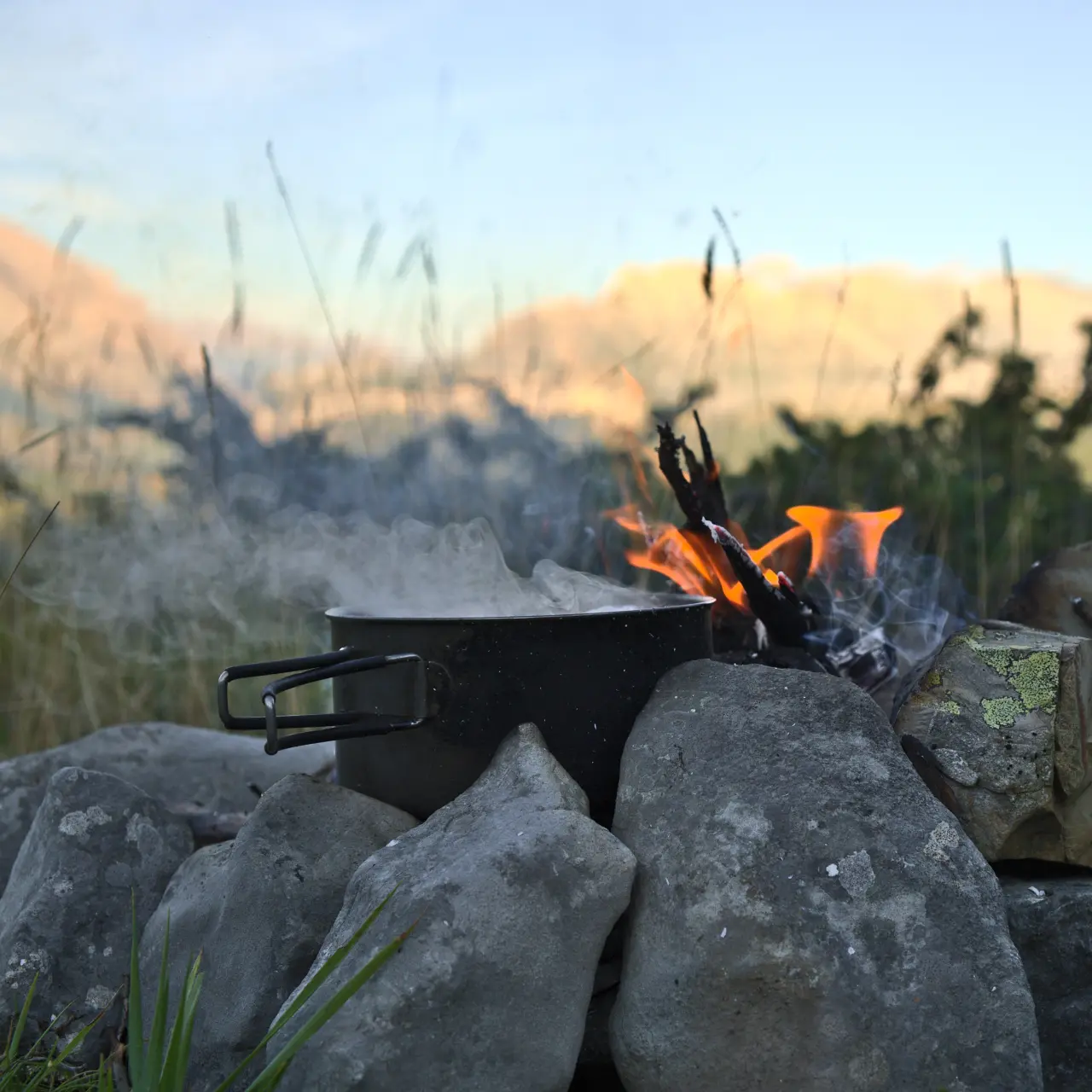 France | Alpes
Mountain bivouac in the Alps
From $450 – 2 joursGo hiking in the mountains to enjoy the sunset, a shepherd’s meal cooked on the coals and fall asleep under the stars sky. A 2 days hiking trip in the Alps.
Know more →
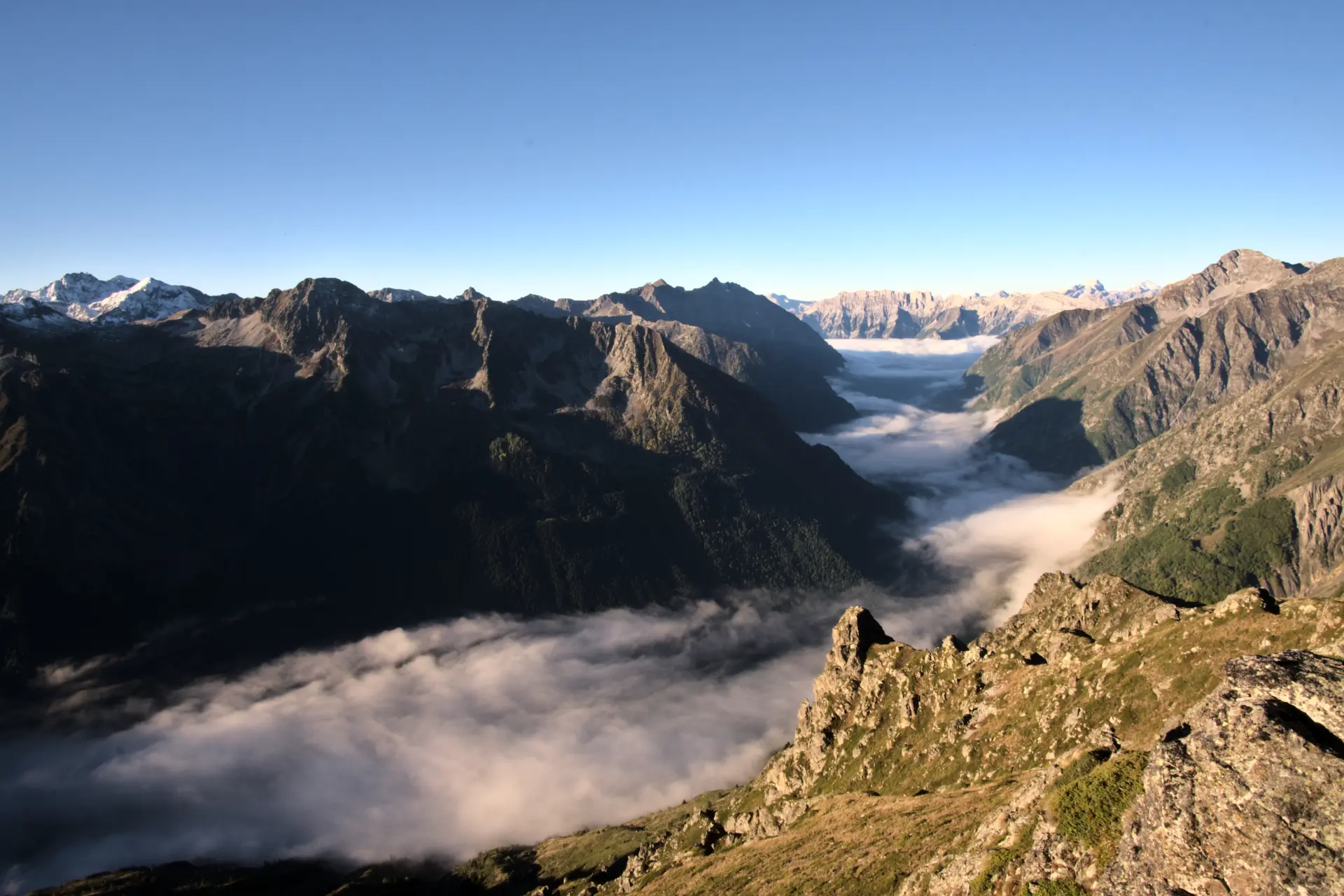 Écrins
Écrins National Park Tour
Hiking Southern AlpsFrom $1,900 – 6 jours6 days of trekking in one of the wildest part of the Alps.
Know more →


